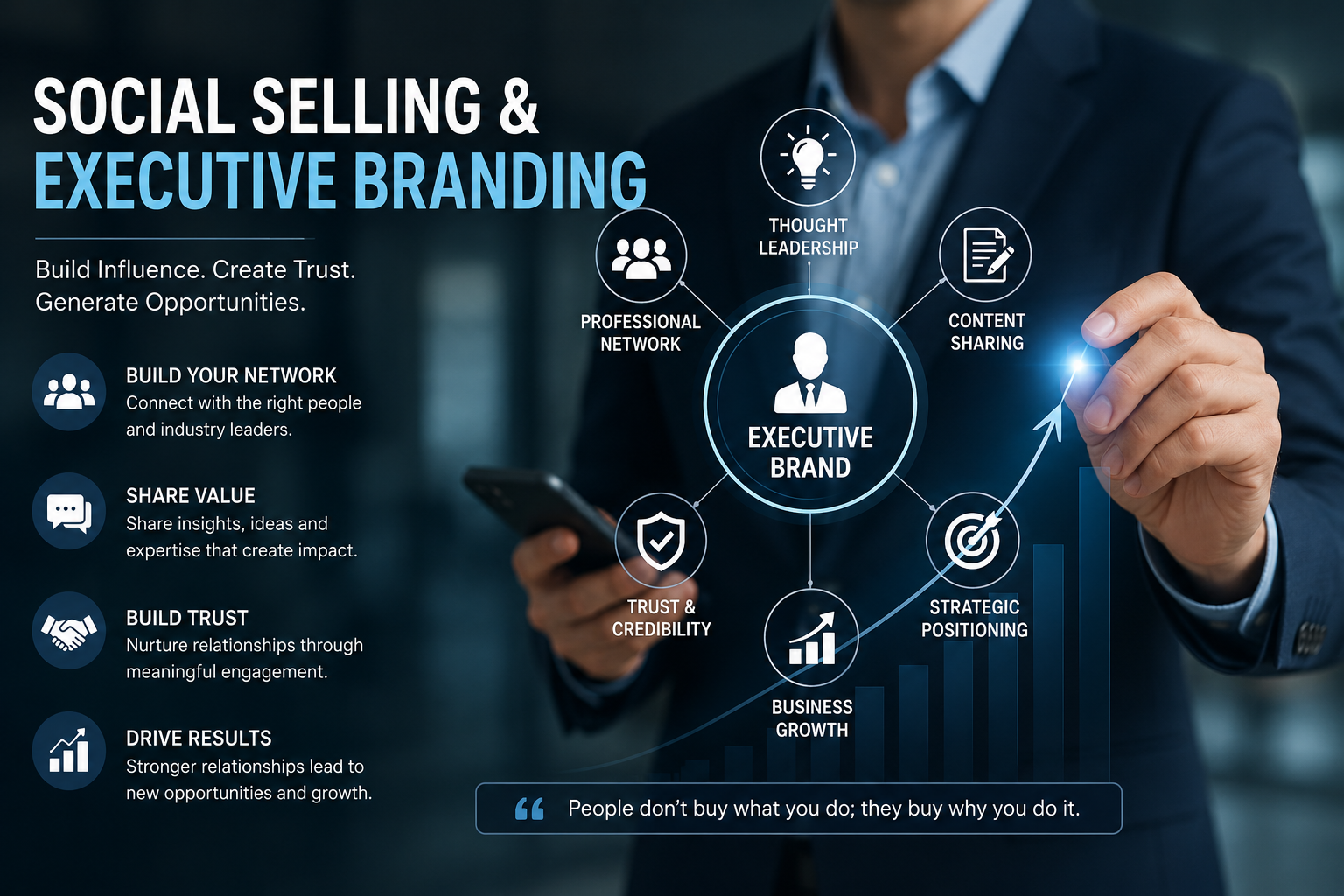
In today's digital-first business environment, decision-makers no longer rely solely on traditional sales methods to build relationships or generate opportunities. Instead, they turn to professional platforms, thought leadership, and meaningful online engagement to establish trust before initiating business conversations. This shift has made social selling and executive branding essential components of modern business growth.
In today's digital-first business environment, decision-makers no longer rely solely on traditional sales methods to build relationships or generate opportunities. Instead, they turn to professional platforms, thought leadership, and meaningful online engagement to establish trust before initiating business conversations. This shift has made social selling and executive branding essential components of modern business growth.
Social selling is the practice of leveraging social media platforms—particularly professional networks—to identify prospects, engage with industry peers, share valuable insights, and nurture long-term business relationships. Rather than focusing on direct selling, it emphasizes providing value, building credibility, and positioning oneself as a trusted advisor. By consistently sharing relevant content, participating in discussions, and understanding customer needs, professionals can create stronger connections that often lead to higher-quality business opportunities.
Executive branding complements this approach by establishing a leader's professional identity and reputation. CEOs, founders, directors, and senior executives who actively communicate their expertise, business vision, and industry knowledge become influential voices within their sectors. A strong executive brand enhances organizational credibility, attracts partnerships, inspires employees, and builds confidence among customers, investors, and stakeholders.
Tags
Leadership
Growth
Marketing